


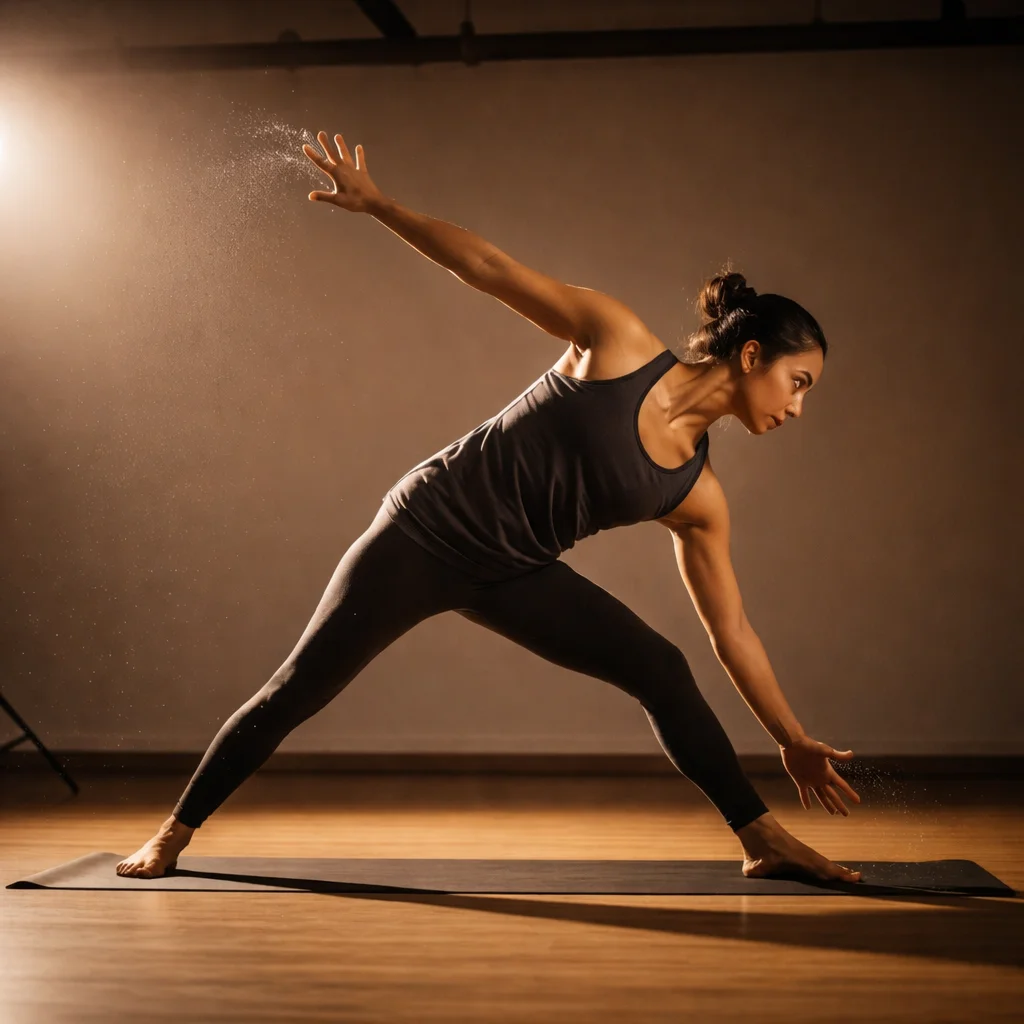
Ashtanga Vinyasa is a dynamic, structured yoga style that links breath with a set sequence of postures, building strength, flexibility, focus, and stamina through continuously.
“Yoga means Self Realization”
The word yoga is derived from the Sanskrit root yuj meaning to bind, union or communion. In its spiritual sense, it is the process by which the identity of the Jivatma & Paramatma is realized by the yogi. The Jivatma is united with the Paramatma by the practice of yoga. Yoga means union with the lord; this is the goal of human life. To achieve this goal we have to follow eight stages, these are below.
Eight Limbs of Yoga:
Yama-(Ethical discipline)
- Ahimsa -Non violence
- Sathya-Truthfulness
- Asteya-Non stealing
- Bhramacharya-Continence or non-lust
- Aparigraha- Non coveting.
Niyama
- Niyama are rules of conducts that apply to individual discipline, while yama are universal in their application.
- Saucha-Purity or cleanliness
- Santosa-contentment
- Tapas-ardour or austerity
- Svadhyaya-Study of the self
- Ishwarapranithana-dedication to the lord
Asana-(Unusual Posture)
Asana brings steadiness, health and lightness of limb. A steady and pleasant posture produces mental equilibrium and prevents fickleness of mind. Asanas are not merely gymnastic exercise; they are postures.
Asanas can be done alone, as the limbs of the body provide the necessary weights and counter weights.
Asanas have been evolved over the centuries so as to exercise every muscle, nerve and gland in the body. They secure fine physique, which is strong and elastic without being muscle-bound and they keep the body free from disease.
Forgetfulness of physical and mental consciousness in health. The yogi frees himself from physical disabilities and mental distractions by practicing asana.
Pranayama-(breathing technique)
Prana means breath, respiration, life, vitality, wind, energy or strength. Ayama means length, expansion, stretching or restraint. Pranayama is thus science of breath. Prana is the body of the individual (Jivatma) is part of the cosmic breath of the universal spirit (Paramatma). An attempt is made to harmonise the individual breath (pinda-prana) with the cosmic breath (Brhamanda-prana) through the practice of pranayama.
The yogi first learns Pranayama to master the breath. This will enable him to control the senses and so reach the stage of pratyahara . Only then will the mind be ready for concentration.
Pratyahara-(Withdrawal of senses)
If a man’s reason succumbs to the pull of his senses he is lost. On the other hand, If there is rhythmic control of breath, the senses instead of running after external objects of desire turn inwards , and man is set free from their tyranny .This is the fifth stage of yoga namely pratyahara, where the senses are brought under control.
Dharana-(concentration)
When the body has been tempered by asanas, when the mind has been refined by the fire of pranayama and when the senses have been brought under control of pratyahara, the sadhaka reaches the sixth stage called dharana. Here he is the concentrated wholly of on a single point or on a task in which he is completely engrossed. The mind has to be stilled in order to achieve this state of complete absorption.
Arjuna, the mighty bowman of the epic Mahabharata, provides us with an example of what is meant by dharana. Once Drona, the preceptor of the royal princes, organised on archery contest to test their proficiency. They were called upon on by one to describe the target, which was pointed out to them. It was a nesting bird. Some princes described the grove of trees, others the particular tree or the bough on which the nest stood. When Arjuna’s turn came, he described first the bird. Then he saw only its head, and lastly he could see nothing but the shining eye of the bird, which was the centre of the target chosen by Drona.
Dhyana-(Meditation)
When oil poured from one vessel to another, one can observe the steady constant flow. When the flow of concentration is uninterrupted, the state that arises is dhyana(Meditation). As the filament is an electric bulb glows and illumines when there is a regular uninterrupted current of electricity, the yogi’s mind will be illuminated by dhyana. His body, breath, senses, mind, reason and ego are all integrated in the object of his contemplation- the universal spirit. There is no other feeling except a state of supreme bliss. Like a streak of lightning the yogi sees light that shines beyond the earth and the heavens. He sees the light that shines in his own heart. He becomes a light unto himself and others.
Samadhi-(Enlightment)
Samadhi is the end of the sadhaka’s quest. As the peak of his meditation, he passes into the state of Samadhi, where his body and senses are at rest as if he asleep, his faculties of mind and reason are alert as if he is awake, yet he has gone beyond consciousness. The person in a state of Samadhi is fully conscious and alert.
The sadhaka has attained true yoga; there is only the experience of consciousness, truth and unutterable joy. The mind can’t find words to describe the state and the tongue fails to utter them.
Reviews
There are no reviews yet.